
第 39 届中国控制会议
The 39th Chinese Control Conference (CCC 2020)
July 27–29, 2020. Shenyang, China
Plenary Panel Discussion1
Title: From Automation to Intelligence: Opportunities and Challenges (从自动化到智能化:机遇与挑战)
Chair: Professor Ben M. Chen, Chinese University of Hong Kong, China
Panelists (By the alphabetic order of their surnames):
Professor Minyue Fu, University of Newcastle, Australia
Professor Guoqiang Hu, Nanyang Technological University, Singapore
Professor Huashu Qin, Chinese Academy of Sciences, China
Professor Jifeng Zhang, Chinese Academy of Sciences, China
Professor Tian Zheng, Columbia University, USA
CCC 2020 proudly presents the plenary panel session on From Automation to Intelligence: Opportunitiesand Challenges. We are honored to be able to invite five prominent renowned researchers and educatorsin the field to be the panelists. The objective of the plenary panel session is to provide an opportunity forresearchers, especially youngsters, to interact with the experts in the field to seek their advice or debateon issues relating to control, automation and artificial intelligence such as current status, challenges andopportunities, future perspectives, as well as how to start a career as a researcher and how to approachchallenging research issues, etc. During the session, panel members will share their vast experiences andvisions with audience through effective face-to-face dialogues.
The panel consists of the following five world class researchers and educators.
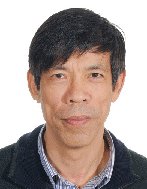 Minyue Fu received the B.Sc. degree in electrical engineering from the University of Science and Technology of China, China, in 1982, and the M.S. and Ph.D. degrees in electrical engineering from the University of Wisconsin‐Madison, USA, in 1983 and 1987, respectively. From 1987 to 1989, he was an Assistant Professor in the Department of Electrical and Computer Engineering, Wayne State University, USA. He joined the Department of Electrical & Computer Engineering at the University of Newcastle, Australia, in 1989, where he is a Chair Professor of Electrical Engineering. He has been Visiting Professors at the University of Iowa, USA, Nanyang Technological University, Singapore and Tokyo University, Japan. He has held ChangJiang Visiting Professorship at Shandong University, China, and Distinguished Professorship at Zhejiang University and Guangdong University of Technology, China.
Professor Fu has been an Associate Editor for IEEE Transactions on Automatic Control, Automatica, IEEE Transactions on Signal Processing, and the Journal of Optimization and Engineering. His main research interests include control systems, signal processing, and communications. His current research projects include networked control systems, distributed control, smart electricity networks, and super‐precision positioning control systems. He is a Fellow of IEEE, Fellow of Institute of Engineers Australia, and Fellow of Chinese Association of Automation.
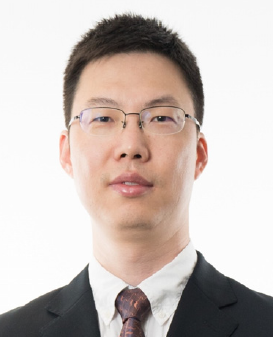 Guoqiang Hu received the B.Eng. degree in Automation from the University of Science and Technology of China in 2002, the M.Phil. degree in Automation and Computer‐Aided Engineering from the Chinese University of Hong Kong in 2004, and the Ph.D. degree in Mechanical Engineering from the University of Florida in 2007. He joined the School of Electrical and Electronic Engineering at Nanyang Technological University, Singapore in 2011, and is currently a tenured Associate Professor. He was an Assistant Professor at Kansas State University, Manhattan KS, USA, from 2008 to 2011. His research interests include distributed control, optimization and games, with applications to multirobot systems and smart city systems. He was a recipient of the Best Paper in Automation Award in the 14th IEEE International Conference on Information and Automation in 2017, a recipient of the Guan Zhao‐Zhi Award in the 36th Chinese Control Conference in 2017, and a recipient of the Early Career Teaching Excellence Award at Nanyang Technological University, Singapore, in 2015. He serves as Associate Editor for IEEE Transactions on Automatic Control, IEEE Transactions on Control Systems Technology, IEEE Transactions on Automation Science and Engineering, and Unmanned Systems, and Technical Editor for IEEE/ASME Transactions on Mechatronics.
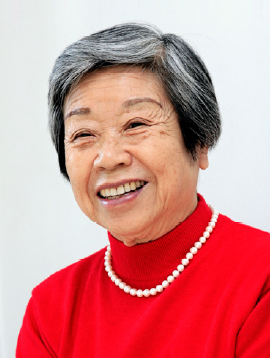 Huashu Qin graduated from the Department of Mathematics, Nankai University, Tianjin, China, in 1956, and received her Ph.D. degree in mathematics from Jagiellonian University in Cracow, Poland, in 1961. She was a staff member at the Institute of Mathematics, the Chinese Academy of Sciences (CAS) in Beijing and worked in the field of control theory and applications, including guidance and control of missiles and satellites and temperature control of industrial processes. Since 1979, she has been affiliated with the Institute of Systems Science (ISS) of CAS. She is currently a Professor Emeritus.
Professor Qin has been a member of the Standing Council of Chinese Association of Automation (CAA) since 1980, and the Chairman of the Technical Committee on Control Theory (TCCT), CAA (1996‐2003), and is currently an advisor. She has been the main organizer of the annual Chinese Control Conference (CCC) and she was also one of the main organizers for several international events held in China, which includes the 1988 IFAC Symposium on System identification and the 14th IFAC World Congress. She has been Deputy Editor‐in‐Chief of the journal Control Theory and Applications since 1984 and is currently a advisor of this journal.
Professor Huashu Qin’s current research interests are on the problems of control of optimization and game including their algorithms, and especially artificial intelligent (AI). For example, what is AI from the viewpoint of system control and how to understand from the perspective of algorithm‐integreted in the era of big data.
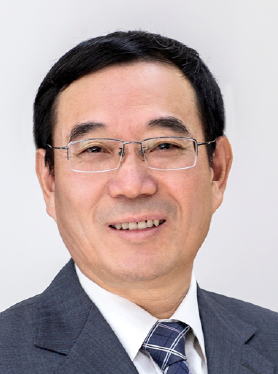
Ji-Feng Zhang received his B.S. degree in mathematics from Shandong University in 1985 and Ph.D. degree from the Institute of Systems Science (ISS), Chinese Academy of Sciences (CAS) in 1991. Since 1985, he has been with the ISS, CAS, and now is the Director of ISS. His current research interests include system modeling, adaptive control, stochastic systems, and multi‐agent systems.
Professor Zhang is an IEEE Fellow, IFAC Fellow, CAA Fellow, and Member of the European Academy of Sciences and Arts. He received the Distinguished Young Scholar Fund from National Natural Science Foundation of China in 1997, and the Second Prize of the State Natural Science Award of China in 2010 and 2015, respectively. He is Vice-Chair of the IFAC Technical Board and Vice-President of the Chinese Association of Automation; and was Vice-President of the Systems Engineering Society of China, and Convenor of Systems Science Discipline, Academic Degree Committee of the State Council of China. He is the founding Editor‐in‐Chief of All About Systems and Control, and has served as Editor-in-Chief, Senior Editor or Associate Editor for more than 10 academic journals, including Science China Information Sciences, IEEE Trans. on Automatic Control, SIAM Journal on Control and Optimization.
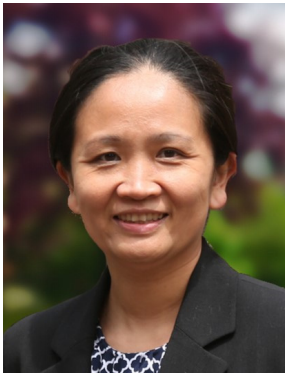
Tian Zheng is Professor and Chair of Statistics, Associate Director forEducation of Data Science Institute at Columbia University, USA. She developsnovel methods for exploring and understanding patterns in complex data fromdifferent application domains such as biology, psychology, climatology, and etc.Her current research projects are in the fields of statistical machine learning,spatiotemporal modeling and social network analysis. Professor Zheng’s researchhas been recognized by the Outstanding Statistical Application Award from theAmerican Statistical Association (ASA), the Mitchell Prize from ISBA and a Googleresearch award. She became a Fellow of American Statistical Association in 2014.Professor Zheng is the receipt of 2017 Columbia’s Presidential Award forOutstanding Teaching. In 2019, she is the Chair for ASA’s section on StatisticalLearning and Data Science.